“My seven decades as a player began on a farm in Otago with limitless opportunity to play; my five decades as parent, grandparent and teacher/lecturer have led me to understand that play with people, places, things, and ideas is fundamental to survival for every child and youth. My experiences in Playgroups in the UK, Playcentre Aotearoa, the Intermediate Schooling sector, the AUT Centre for Refugee Education, and as lecturer in Initial Teacher Education has informed my passionate advocacy for access to play for every child and youth in Aotearoa NZ.”
A tribute to Nola Harvey
Contributors: Jenny Ritchie, Janet S. Gaffney, Diti Hill-Denee, Ruth Ham, Meg Jacobs, Marianne Kayes, and Charlotte Robertson
This tribute honours the life and work of Nola Harvey, whose decades of dedicated advocacy profoundly shaped early childhood care and education in Aotearoa New Zealand. Through reflections from colleagues, it acknowledges her wisdom, dedication, and enduring influence across multiple areas of advocacy.
Our dear friend and colleague, Nola Harvey, died on December 25, 2024, surrounded by her family at their home in Leigh. After her very moving memorial service, a group of colleagues decided it was important to honour Nola’s immense contributions to early childhood care and education. As you will read below, Nola was incredibly dedicated in her loyal service in a wide range of arenas, and was greatly respected and admired for her commitment, wise contributions and advocacy for social, cultural and environmental justice. Her causes ranged from advocacy for children’s rights in general, including their rights to play, to education in their home languages, for Te Tiriti, for refugee children and families, and to alleviating child poverty.
Nola became a member of Te Rōpū Tākaro | Play Aotearoa in 2003 and secretary from 2015-2020. On their website, she wrote:
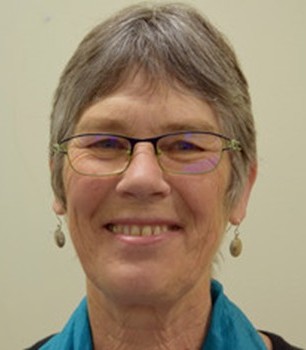
Nola was also concerned with caring for the environment, as seen in her work with the Leigh Harbour Valley Society, contributing to the restoration of Cape Rodney and the Leigh Harbour foreshore.
Nola’s scholarship made a major contribution to early childhood care and education. This work was particularly focused on supporting children, families, and teachers from refugee and migrant backgrounds, illuminating the value of fostering heritage and home languages and cultural knowledges. In a 2013 article drawing on her Master’s study (2011) Nola alerted our field to the implications of changing demographics due to growth in immigrant communities, noting the potential of Te Tiriti o Waitangi and Te Whāriki to guide our responses in this context. She wrote:
A linguistically responsive pedagogy in ECEC centres that encourages public support for bilingual activity can empower children and teachers to use their home languages, and validates bilingualism as effective for learning and teaching (Harvey, 2011). Knowing how to foster bilingual activity is vital for being responsive to policies that prioritise Māori and Pasifika learners in Aotearoa New Zealand and as an ethical response to linguistically diverse families (Harvey, 2013, p. 20).
Nola challenged all teachers to “critically reflect on and reframe their own ethical commitments, their professional knowledge, and possibilities for home-language inclusion” (Harvey, 2011, p. 22) in order to “'go beyond culture and belonging’ to include a linguistically responsive dimension to their pedagogy” (p. 23).
What follows are three contributions in remembrance of Nola’s warmth, wisdom, scholarship and advocacy. The first, from Janet S. Gaffney, highlights Nola’s scholarship. The second piece comes from Charlotte Robertson, with contributions from Diti Hill-Denee and Marianne Kayes, and highlights the wide range of Nola’s community engagement and advocacy. Finally, Ruth Ham and Meg Jacobs offer their reflections on Nola’s dedication, advocacy, wisdom and grace.
Nola's scholarship by Janet S Gaffney
Nola Harvey BA, DipTchg, LTCL TEFL, Dip Tchg ECE, PGDipLangLit, MEd
Nola was an unassuming, feet-on-the-ground teaching scholar. The rights of the child were her core message. She was almost always teaching in her responsive listening, talking, play, and writing. I am struck by the clarity and pure simplicity of her vision of children and families. She did not think about one without the other, and always positioned families’ languages, cultures, knowledge and ways of being as the wealth we may have the privilege to come to know and understand.
Nola was an endless reservoir of lived wisdom and professional knowledge, embedded in relationships. The sources of knowledge Nola possessed are rare and precious taonga and most often not recorded and, therefore, challenging to access. One only had to prime the pump with a question to tap into the deep well, and history would flow in a never-ending relational web of names in a schema that made sense only to Nola. Then, she would extoll the contributions of each individual and their work. Each exchange was speckled with promises: “You need to read this. I’ll send you a copy.” I would have a list of a dozen names within minutes.
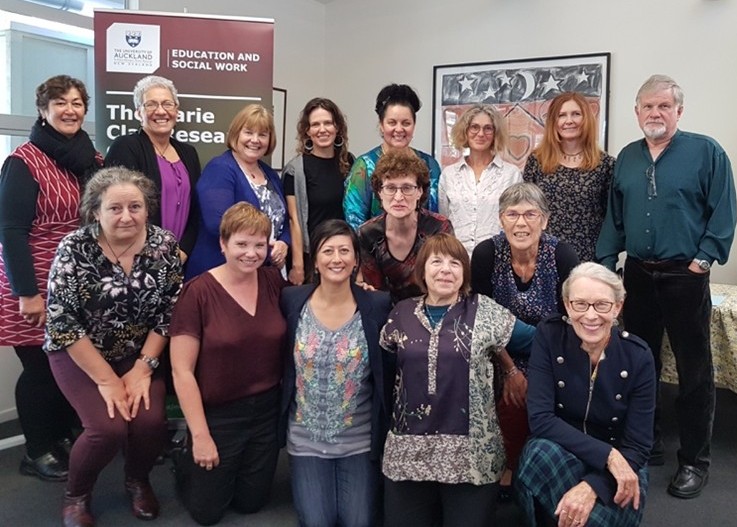
Nola and I had long conversations almost solely focused on young children, families and teaching. The conversations were not just talk but rather future-focused on action, pedagogies and policies. The “talk” was intentional. The inference was you were to make good use of it. Her “talk” was essentially impactful, an undocumented spread of knowledge, living through thinking and teaching. Nola’s generosity was unbounded. I quickly learned that once Nola entered a room, she was a magnet for teachers and colleagues. Sometimes, as I witnessed the cluster of individuals drawn to her light, one would share with me a nugget of a story of Nola’s impact on their life. Afterwards, when I relayed bits of stories to Nola, she would wave my comments away and turn the light back on the individual.
Sometimes, traditional indices of quality research fall short of measuring scholarship. Nola was a true scholar. The derivation of the term “research” is the “act of searching closely”; to “investigate or study (a matter) closely, search or examine with continued care" (Online Etymology Dictionary, n.d.). Nola’s research was ongoing, not only reflecting on past experience but also continuously engaging in playgroups and early childhood centres, looking closely at children’s experiences. Families’ languages were at the heart of what mattered for Nola. The language of the child is their identity, culture, taonga, their world. A few highlights from her publications and projects include:
- Co-authored in 2007 with Criss Jones-Diaz, “Other words, other worlds: Bilingual identities and literacy”.
- In 2014, “Our children, our choice: Priorities for policy” on the Rights of Children, with Jenny Ritchie, Marianne Kayes, and Carol Smith as part of the Child Poverty Action Group.
- That same year, Nola was invited by Dr Rae Si’ilata to be part of a diversified “thought group” to design the Pasifika Early Literacy Project funded by the Ministry of Education through 2024.
- Nola walked alongside Alison Sutton at Auckland Council, COMET, before Talking Matters even had a name. Nola’s commitment was to ensure the maintenance of children’s first languages while adding others and valuing each family’s knowledges and pedagogies.
- Nola was part of the TLRI project team, Supporting learning in the early years for children who learn in more than one language: Developing deeper understandings for practice (2013–2015) led by Prof Helen Hedges, which led to the book published by NZCER: Teachers voyaging in plurilingual seas: Young children learning through more than one language with Val Podmore, Helen Hedges, Peter Keegan, and Nola Harvey.
From 2017–2023, Nola was appointed as an Honorary Academic in Te Puna Reo Pohewa I The Marie Clay Research Centre. Two highlights are:
- As part of an international research collaborative on sustaining Indigenous languages funded by a Royal Society Catalyst Seeding Grant, Nola co-authored an article in a special issue of Kōtuitui, New Zealand’s Journal of Social Sciences with Dr Meg Jacobs and Amanda White: Parents and whānau as experts in their worlds: Valuing family pedagogies in early childhood.
- Nola, Meg Jacobs and I met and talked for more than a year about a natural or organic way to have children’s and families’ languages, knowledges and pedagogies be folded into the sanctioned curriculum of early childhood and the primary grades. These conversations led to Understand Me (funded by the Auckland Airport Community Trust and TLRI 2021–2023).
Nola’s capacity was endless. She showed up, engaged and acted. Her legacy of action is entrusted to us.
Nola's community contributions and advocacy
Authored by Charlotte Robertson, Diti Hill-Denee, and Marianne Kayes
It is hard to write about Nola as she was so passionate about life and living. Nola was inspirational—always a champion for the rights of children and young people. A giving person who constantly contributed more than was asked for or was expected. She was quick to acknowledge the contributions of others and generous in her affirmations while always downplaying her own input, guidance and effort. She was hands on, practical and solutions based. Nola was always open to discussions on ethics and often provided an overlooked insight. She always focussed on the issues and not the personalities. She was incredibly loyal and always saw the best in people and was generous in her summations.
Nola was involved in the Parnell and Newmarket Playcentres with her four children and more recently Massey Playcentre with her grandchildren. She served as a Senior Lecturer in Early Childhood (language and culture) at Waipapa Taumata Rau–The University of Auckland (1997–2014) and was then invited to be an Honorary Academic, a role she enjoyed fulfilling as she supported others to complete research and write articles around language and culture.
In 2003 Nola coordinated a powerful and in-depth working group paper that focused on children and youth refugee and asylum seekers. This contributed to the report to the United Nations by the NGO Action for Children and Youth Aotearoa (now known as the Children’s Rights Alliance Aotearoa), which focused on Aotearoa NZ’s implementation of the United Nations Convention on the Rights of the Child (UNCRC). She also contributed to subsequent reports, always with a strong focus on children of refugees, on language and literacy and, of course, on early childhood care and education. She kept up to date with research and with opportunities to contribute to upholding the rights of children here in Aotearoa. Nola consistently advocated for recognition of the importance of children being strong in their home language. She worked at the Māngere Refugee Resettlement Centre Early Childhood Centre when it was initially set up and was a member of the AUT Refugee Advisory Board.
Nola not only recognised the importance of play but strove to set up an independent branch of the International Play Association (IPA) in Aotearoa NZ to promote Article 31 of the United Nations Convention on the Rights of the Child. As others came and went, it took many years with Nola and a few committed others persevering to gather enough colleagues in 2015 to re-establish and maintain a New Zealand branch—ten were needed, but to make it viable, the aim was for twenty. Nola represented New Zealand at IPA Conferences in Berlin (2005) and Canada (2017). She was Secretary from before a branch was officially formed, and apart from a few years as President, continued in that role until 2024. Her historical perspective was invaluable in decision-making. Nola’s dedication was rewarded with Life Membership as she stepped down from the Board.
Nola became a member of OMEP (L'Organisation Mondiale pour l'Éducation Préscolaire), a World Organisation for Early Childhood Education, in the 1990s soon after an Auckland Chapter was formed. She stepped in and out of roles on National Executive and in Tāmaki Makaurau, stepping down from the position of Rōpū representative on National Executive in 2024. It was Nola who pushed for a Human Rights position on the OMEP National Executive. This led to her attending monthly Human Rights Network meetings in Auckland and to writing reports for National Executive meetings. Nola’s reports were always well-researched and documented and very, very comprehensive.
One of Nola’s major contributions to OMEP was with her colleagues lobbying the Ministry of Education for a reprint of the child rights book For Each and Every Child: He Taonga Tonu te Tamariki (Collins & Jacob, 2011) and then contributing to OMEP formulating a digital resource to support teachers to use this book (Office of the Children's Commissioner, n.d.). Her focus was on language and literacy and play. Her workshops always had a social justice emphasis. Thanks to Nola’s reminders OMEP Tamaki Makaurau acknowledged Refugee Day.
Nola also contributed to political advocacy through submissions and feedback to Government for OMEP and other child rights organisations (including Tick4kids and Child Poverty Action Group) on issues affecting children, refugees, and/or the early childhood sector, language, literacy and play.
Nothing was ever too much trouble, no matter how busy she was. An example is at local OMEP meetings where Nola always provided suppers that not only catered for diverse eating requirements, but she was always over-generous both in supply and in distribution of leftovers. She was also generous with contributions of Black Stilt wine grown on their Waitaki Vineyard. In recognition of her enormous commitment and contribution to OMEP and the early childhood community over so many years Nola was awarded Life Membership of OMEP. In honour of her contribution to OMEP free memberships have been awarded for 2026.
Kua hinga he tōtara i te wao nui a Tāne.
A mighty tōtara has fallen in the forest of Tane.
He mahi aroha–A work of love
Authored by Ruth Ham and Meg Jacobs
For Nola, the world was who was in front of her. Nola made space for people and held that space even when she had many responsibilities to juggle. And Nola was constantly apologising, even though she had nothing to be sorry for. Nola would say, “we need to stay on track,” but we never stayed on track, and we never finished on time. We had meetings with Nola in her car as she was driving and navigating, under a tree with lunch and her grandchildren in tow, and impromptu meetings on the phone or lingering in the parking lot long after an official meeting ended. These meetings were the kind you wanted to attend, the kind that were wrapped in care for other people, and the kind that finished with a smile. That’s how Nola worked, with love.
Nola’s activism centred on obligations to Te Tiriti o Waitangi and United Nations human rights conventions in early childhood education. Nola was a staunch advocate for families in Auckland’s resettlement sector, and she devoted a great deal of time supporting the transition of families residing at the Mangere Refugee Resettlement Centre. She encouraged ECE teachers to share the Indigenous heritage of Aotearoa with families through authentic experiences of tikanga and te reo Māori, creating space for family languages and cultural practices. With deep respect for the ECE profession, Nola supported teachers to embrace their bilingual strengths in their work with tamariki and whānau to strengthen resettlement outcomes and bicultural belonging.
Everywhere we went with Nola, people trusted and loved her. Nola’s humility, coupled with her boundless energy, continues to echo throughout the organisations and projects she contributed to. And whether it’s a photo, a voicemail, a text, or an email that brings us back to the moments when Nola wrapped us in love, it was the way she worked alongside people with an unwavering commitment to equity and justice that we will remember most.
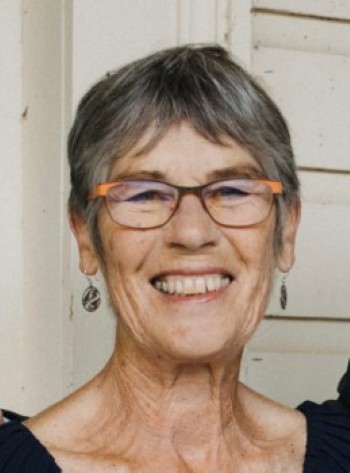
Nola, you dedicated your life to nurturing the youngest hearts and minds, planting seeds of knowledge, love, and confidence in countless tamariki. Your passion for early childhood education was not just a job, but a calling, one that shaped brighter futures and stronger communities. You carried the light of wisdom with gentleness and grace. You uplifted not only the children in your care, but their whānau, your colleagues, and everyone blessed to walk beside you. You were a Mareikura, a woman of great mana, dignity, and compassion.
Mā te huruhuru, ka rere te manu.
Adorn the bird with feathers so it may fly.
References
Anandh, T., Harvey, N., & Hedges, H. (2016). Multilingual children, multilingual teachers: Symonds Street Early Childhood Education Centre. In V. N. Podmore, H. Hedges, P. J. Keegan, & N. Harvey (Eds.), Teachers voyaging in plurilingual seas: Young children learning through more than one language (pp. 79-97). NZCER Press.
Collins, A. (Ed.), & Jacobs, H. (translator) (2011/2021). For each and every child. Learning Media; UNICEF New Zealand; OMEP NZ. https://www.omepaotearoa.org.nz/he-taonga-tonu-te-tamariki--for-each-and-every-child.html
Diaz, C. J. & Harvey, N. (2007). Other words, other worlds: Bilingual identities and literacy. In L. Mackin, C. J. Diaz, & C. McLachlan (Eds.). Literacies in childhood: Changing views, challenging practice (2nd ed., pp. 201–216). Elsevier.
Hartley, C., Rogers, P., Smith, J., Lovatt, D., Harvey, N., & Hedges, H. D. (2016). Multilingual children, monolingual teachers: Mangere Bridge Kindergarten. In V. N. Podmore, H. Hedges, P. J. Keegan, & N. Harvey (Eds.), Teachers voyaging in plurilingual seas: Young children learning through more than one language (pp. 98–115). NZCER Press.
Harvey, N. (2013). Principled practices: Respect and reciprocity through linguistically responsive pedagogy. Early Childhood Folio, 17(1), 19–23. https://doi.org/10.18296/ecf.0127
Harvey, N. (2011). Talking our selves: Stories of identities and languages of bilingual teachers working in English medium settings in early childhood services in the Auckland region. Unpublished Master's thesis. University of Waikato.
Harvey, N. E., Hedges, H., & Podmore, V. N. (2016). Language diversity in context: Navigation points. In V. Podmore, H. Hedges, P. Keegan, & N. Harvey (Eds.), Teachers voyaging in plurilingual seas: Young children learning through more than one language (pp. 12–29) NZCER Press.
Harvey, N., Hedges, H., Podmore, V., & Keegan, P. J. (2016). Conclusions: Insightful landings. In V. Podmore, H. Hedges, P. Keegan, & N. Harvey (Eds.), Teachers voyaging in plurilingual seas: Young children who learn through more than one language (pp. 116–133). NZCER Press.
Jacobs, M. M., Harvey, N., & White, A. (2021). Parents and whānau as experts in their worlds: valuing family pedagogies in early childhood. Kōtuitui: New Zealand Journal of Social Sciences Online, 16(2), 265–282. https://doi.org/10.1080/1177083X.2021.1918187
Office of the Children's Commissioner. (n.d.). He taonga tonu te tamariki | For each and every child. OCC Ombudsman. https://www.omepaotearoa.org.nz/he-taonga-tonu-te-tamariki--for-each-and-every-child.html
Podmore, V., Hedges, H., Keegan, P. J., & Harvey, N. (2016). Introduction: Scanning policy and curriculum horizons. In V. Podmore, H. Hedges, P. Keegan, & N. Harvey (Eds.), Teachers voyaging in plurilingual seas: Young children who learn through more than one language (pp. 1–11). NZCER. Press.
Research. (n.d.). In Online Etymology Dictionary. https://doi.org/10.1191/1478088706qp063oa
Ritchie, J., Harvey, N., Kayes, M., & Smith, C. (2014). Our children, our choice: Priorities for policy. Child Poverty Action Group Policy Paper Series. Part Two: Early Childhood Care & Education (ECCE). In M. C. Dale, M. O’Brien, & S. St John (Eds.), (pp. 38–57). Child Poverty Action Group. https://web.archive.org/web/20210129045934/https://www.cpag.org.nz/assets/Publications/1-0%20Our%20Children%20Our%20Choice%20Part%202.pdf
Contributors
Jenny Ritchie is Professor of Education at Te Herenga Waka Victoria University of Wellington.
Janet S. Gaffney, PhD, is Professor of Educational Psychology-Literacy and Director of Te Puna Reo Pohewa | The Marie Clay Research Centre.
Diti Hill-Denee, MA (Hons), has been a close friend of Nola and her family from 1973, when she first moved to Auckland from Dunedin. After attending the same Playcentres together they both lectured in early childhood teacher education at the University of Auckland over the 1990s and both retired in 2014. They were members of many of the same professional associations and NGOs, in particular OMEP Aotearoa.
Ruth Ham is Head Teacher at the AUT Centre for Refugee Education Early Childhood Centre.
Meg Jacobs is a senior lecturer in the School of Education at AUT.
Marianne Kayes is a retired hospital play specialist and a Life Member of the Hospital Play Specialists Association and of OMEP Aotearoa NZ.
Charlotte Robertson worked closely with Nola to advocate for the rights of children through OMEP Aotearoa, Action for Children and Youth Aotearoa (now Children’s Rights Alliance Aotearoa New Zealand) and the International Play Association (now Play Aotearoa).